
Baklava Phyllo Recipe
Baklava Dough Recipe:
Ingredients:
5 cups Miray Baklava flour
A little less than 1/2 cup vegetable oil
1 egg
1 cup yogurt
1 packet baking powder
1 tablespoon vinegar
1/2 teaspoon salt
1 cup warm milk (200 ml)
Instructions:
-
In a mixing bowl, whisk together 1 cup yogurt, a little less than 1/2 cup vegetable oil, 1 tablespoon vinegar, 1 egg, and 1/2 teaspoon salt.
-
After mixing the liquid ingredients, add 1 packet of baking powder and some of the 5 cups of Miray Baklava flour.
-
While kneading the dough by hand, slowly and gradually add 1 cup of warm milk in a controlled manner.
-
As the dough takes shape, continue to add Miray Baklava flour slowly.
-
The amount of Miray Baklava flour may vary slightly due to differences in the type of flour and other ingredients.
-
Transfer the kneaded dough onto a surface sprinkled with Miray Baklava flour and knead for about 10 minutes.
-
Once the dough reaches a good consistency, cover it with plastic wrap and let it rest in the refrigerator for about half an hour. This will make it easier to roll out the dough.
Baklava History:
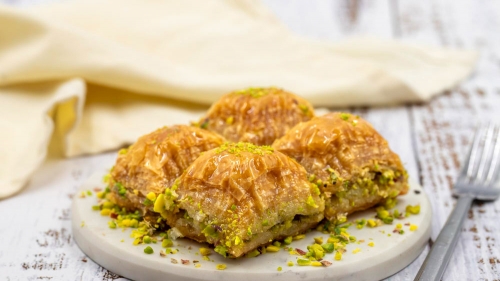
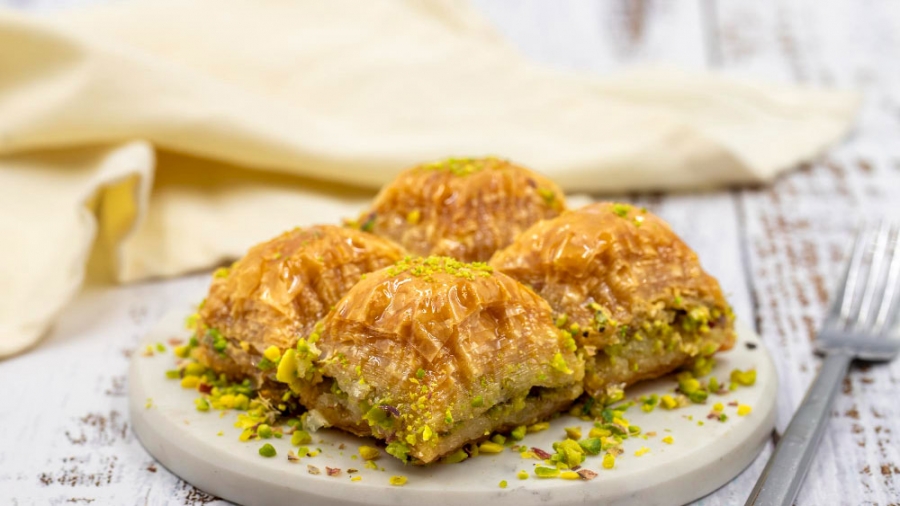
Baklava is a dessert with a rich history that dates back to ancient times. Various points in baklava's history shed light on cultural interactions and the development of recipes. Here are some important points about the history of baklava:
Ancient Period: Ancient Mesopotamia and Assyrian Civilization: While there are no precise records about the origins of baklava, it is believed to have originated in ancient Mesopotamia and the Assyrian civilization. Some records indicate that sweets made with layers of thin dough and dried fruits were prepared during this period.
Byzantine Empire: Byzantine Cuisine: Similar desserts to baklava were prepared during the Byzantine Empire. Sweets made with layers of thin dough and filled with nuts such as almonds, walnuts, or pistachios were sweetened with honey or syrup and served.
Ottoman Empire: Ottoman Palace Cuisine: Baklava, as we know it today, evolved and became widespread during the Ottoman Empire, particularly in the 15th and 16th centuries. Baklava held great importance in the Ottoman palace cuisine, especially during festivities and special occasions. Palace chefs perfected the art of making thin layers of pastry dough and enriching this dessert.
Topkapi Palace: Baklava was a special treat served to the sultans and guests during festivities and special occasions at the Topkapi Palace. Baklava prepared in the palace was also distributed to the public.
Spread and Cultural Interactions: Anatolia and the Balkans: The vast geographical area of the Ottoman Empire facilitated the spread of baklava to Anatolia and the Balkans. Each region adapted baklava to its local ingredients and baking techniques.
Middle East: With the influence of the Ottoman Empire, baklava became popular in the Middle East as well. Today, baklava is enjoyed in countries like Lebanon, Syria, and other Middle Eastern countries.
Modern Times: Industrial Production: In the 20th century, baklava production became industrialized, and it started to be mass-produced. Traditional homemade baklava was also produced by bakeries and confectioneries, reaching a wider audience.
International Recognition: Today, baklava is not only popular in Turkey but also recognized and enjoyed in countries like Greece, Lebanon, Syria, Iran, and many others. Thanks to the popularity of Turkish and Middle Eastern cuisine, baklava has gained international recognition and popularity.
In conclusion, baklava has a long and rich history that dates back to the ancient world. Despite being known by different names and forms throughout history, baklava remains a beloved dessert in Turkish and Middle Eastern cuisine, cherished both locally and internationally.