
Molasses Bagel Recipe

Pekmezli Simit Recipe
Ingredients:
1 cup warm milk
1 cup warm water
A little less than 1 cup vegetable oil
1 tablespoon sugar
1 teaspoon salt
1 cube fresh yeast or 1 small packet dry yeast
Miray flour, as needed
For the molasses glaze:
1/4 cup grape molasses
1/8 cup water
Plenty of sesame seeds
Instructions:
-
In a mixing bowl, combine 1 cup warm milk, 1 cup warm water, a little less than 1 cup vegetable oil, 1 tablespoon sugar, 1 teaspoon salt, and 1 packet of fresh yeast or 1 small packet of dry yeast.
-
Slowly add about 6 cups of Miray flour, kneading until you achieve a soft dough.
-
Cover the dough with a clean cloth and let it rest for 30 minutes.
-
In a separate bowl, mix 1/4 cup grape molasses with 1/8 cup water.
-
Divide the risen dough into pieces the size of a mandarin.
-
Divide each piece into two equal parts.
-
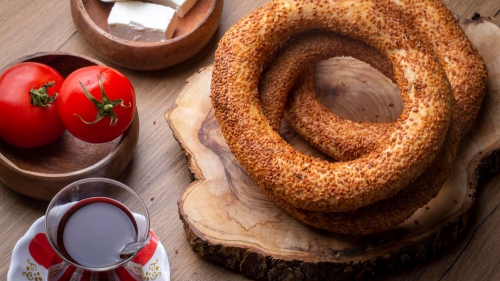
Shape each piece into a rope and twist them together to form a circular shape, resembling a bagel.
-
Dip the formed simit into the molasses mixture, then coat generously with sesame seeds.
-
Place the simit on a baking sheet lined with parchment paper.
-
Preheat the oven to 200°C (390°F) and bake the simit for about 20-25 minutes until golden brown.
-
Once baked, remove the simit from the oven and let them cool.
-
Your crispy simit is ready to be served. This recipe yields approximately 16 simit.
Enjoy your meal!
History of Simit:
Simit, a type of ring-shaped bread, is especially popular in Turkey and has a long history. Here are some important points about the history of simit:
Ottoman Empire Period:
16th Century: The earliest written records about simit date back to the Ottoman Empire. It was consumed in the Ottoman palace during the 16th century, particularly during Ramadan, and was served to the sultans.
Istanbul: Simit became especially popular in Istanbul during the 17th century. During this period, it started to be produced and sold by bakeries throughout the city. It's known that simit sellers roamed the historical districts of Istanbul.
19th and 20th Centuries:
Widespread: In the 19th century, simit spread to different regions within the Ottoman Empire, interacting with various cultures and acquiring different names. For example, it's known as "koulouri" in Greece.
Commercial Production: In the early 20th century, simit began to be commercially produced on a larger scale. Street simit sellers became more common in cities, simit bakeries increased, and simit became a snack consumed both on the streets and at home.
Modern Times:
Today: Simit is widely consumed throughout Turkey. It's especially popular during breakfast, often paired with tea. Known for its sesame-coated exterior and crispy texture, simit is produced by both street vendors and modern bakeries.
International Spread: Simit is not only popular in Turkey but also recognized and enjoyed in other parts of the world. People interested in Turkish cuisine in the Middle East, the Balkans, and even Western countries consume simit.
In conclusion, simit has a rich history dating back to the Ottoman Empire. Despite being known by different names and shapes throughout history, simit remains an integral part of Turkish cuisine, loved both locally and internationally.