
Puff Pastry Recipe
Ingredients
For the dough:
- 1 packet active dry yeast (42 g)
- 1 cup warm water (200 ml)
- 1 cup warm milk (200 ml)
- 1 cup vegetable oil (200 ml)
- 1 egg
- 2 tablespoons granulated sugar
- 2 teaspoons salt
- 6.5-7 cups Miray flour
For the topping:
- Egg yolk
- Sesame seeds
Instructions
-
In a mixing bowl, combine 1 cup warm milk, 1 cup warm water, 1 cup vegetable oil, 1 egg, 2 tablespoons granulated sugar, and 1 packet active dry yeast.
-
Stir well until the yeast is dissolved.
-
Add 2 teaspoons salt and some of the flour, then begin kneading.
-
Gradually add Miray flour while continuing to knead the dough.
-
If desired, you can transfer the dough to a floured surface for easier kneading. You'll need a total of 6.5-7 cups of flour for this recipe.
-
Once the dough is ready, place it back in the bowl, cover it with plastic wrap, and then a clean cloth.
-
Let it rise in a warm place for about 1 hour until it doubles in size.
-
After the dough has risen, remove the plastic wrap and gently punch down the dough to release the air bubbles. Transfer it to a floured surface and knead it again.
-
Divide the dough into two equal parts with a dough cutter or knife, then further divide each half into 12 pieces, resulting in a total of 24 pieces.
-
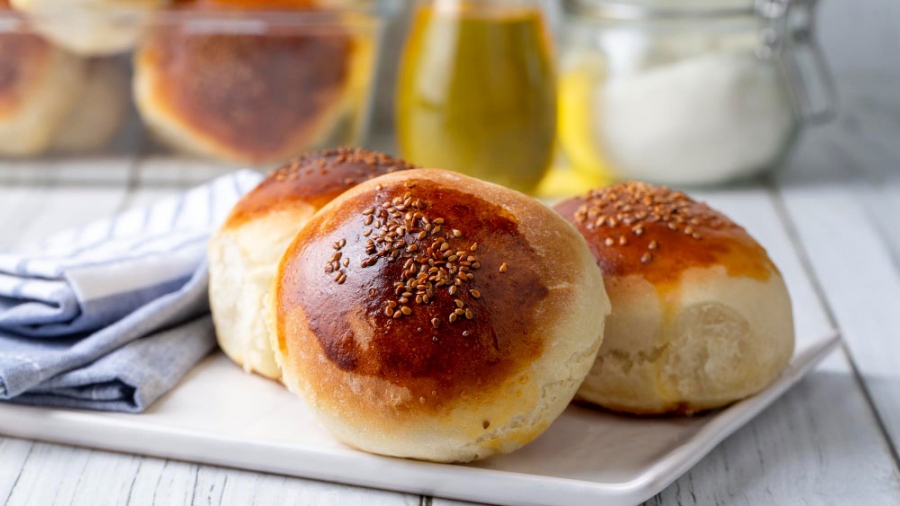
Roll each piece into a ball by hand.
-
Place all the dough balls on a baking sheet.
-
Brush the tops of the dough balls with beaten egg yolk.
-
Optionally, sprinkle sesame seeds over the tops of the dough balls.
-
Let the dough balls rest for another 10-15 minutes to allow them to rise again.
-
Preheat the oven to 180 degrees Celsius.
-
Bake the dough balls in the preheated oven for about 20-25 minutes until they are golden brown.
-
Once baked, your poğaça is ready to serve. Enjoy!
History of Poğaça
The history of poğaça dates back to the Ottoman Empire and even earlier, rooted in the rich culinary heritage of Turkish cuisine. Poğaça is a widely consumed pastry in the Balkans and the Middle East and can be found with different names and recipes in these regions. Here are some important points about the history of poğaça:
Ottoman Empire Period
Cultural Interaction: The vast geography of the Ottoman Empire facilitated the convergence of different cultures' cuisines. During this period, poğaça became popular across various regions of the empire, prepared with different ingredients.
Palace Cuisine: The Ottoman palace cuisine played a significant role in the development of poğaça. Palace chefs mastered the art of pastry-making and created poğaça variations enriched with various ingredients.
Balkans and Middle East
Widespread Consumption: Due to the influence of the Ottoman Empire, poğaça became a widely consumed food in the Balkans and the Middle East. It began to be made in various forms with local ingredients and baking techniques.
Different Names: Known as "pogacha" or "pogaca" in Balkan countries, this pastry can also be found in the Middle East with similar recipes.
Modern Times
Poğaça in Turkey: Today, poğaça is a popular pastry consumed throughout Turkey, enjoyed from breakfast to tea time. Prepared with various fillings (cheese, olives, potatoes, minced meat, etc.), poğaça can be found in bakeries and pastry shops.
Home-made and Commercial Production: Poğaça is made both at home with traditional recipes and commercially in bakeries, catering to a wide range of consumers.
Conclusion
Poğaça is a pastry with a long history, spanning from the Ottoman era to the present day, and found with various recipes across different cultures. Loved and widely consumed, especially in Turkey and the Balkans, poğaça has been a beloved and essential part of dining tables throughout history, thanks to its delicious taste and convenience.