
Loaf Bread Recipe

Ingredients:
- 2 tablespoons of dry yeast
- 1 tablespoon of granulated sugar
- 1.5-2 cups of lukewarm water (350 ml)
- 4 cups of Miray flour (500g)
- 2 teaspoons of salt (level)
- For topping: Yogurt
Instructions:
- Firstly, let's start by dissolving the yeast. To do this, mix yeast and sugar in lukewarm water. Since I'm using active dry yeast, I won't wait too long. If you're using regular yeast, waiting for about 8-10 minutes for the yeast to activate is sufficient. If you're using instant yeast, you don't need to wait; you can use fresh yeast in the same way by dissolving it.
- Take our Miray flour into a mixing bowl, add salt on top, and make a well in the middle. Pour the dissolved yeast into the well and start kneading the dough. The softer and more liquidy the dough, the softer your bread will be. The dough will stick to your hands because it's soft. To prevent this, lightly wet your hands and gather the dough.
- Then cover the dough and let it ferment for about 40 minutes by covering it with a cloth. The warmer the environment, the faster the dough will ferment.
- Once the dough has risen, let's open it up, and again, lightly wet our hands to release the air from the dough.
- Then transfer the dough onto a floured surface. Gather the dough by kneading it with our hands.
- Then, let's cut the dough into 8 equal pieces. It's also helpful to wet the knife we use to prevent the dough from sticking.
- Shape the divided dough into small balls, and at this stage, sprinkle plenty of flour on our hands and the surface to prevent sticking.
- Place parchment paper on a baking tray, so there's no need to grease or flour the tray.
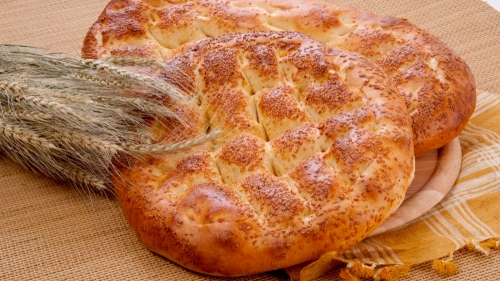
- Roll the dough into thin rolls by hand, making the edges thinner. You can also shape them into round shapes without making rolls, but I prepared them this way to resemble mini bread loaves.
- Place the shaped dough on the baking tray, cover them with a damp cloth, and let them rest for 15-20 minutes for the dough to rise. If you don't cover them, the surface of the dough will dry out and crack. Therefore, be sure to cover them with a damp cloth.
- Once the dough has risen, open them up and brush each one with beaten yogurt using a brush. This will give the bread a golden brown color on top.
- If you prefer not to use yogurt, you can brush them with water using a brush. If you want the tops of the bread to be like stone oven bread, you can sprinkle flour on them.
- Finally, make cuts on the tops with an old knife as you wish, from the side or from the middle.
- Let the bread bake in a preheated oven at 230°C for about 20-25 minutes.
- There's one tip I particularly want to mention, make sure to put a heat-resistant container with water on the bottom of the oven before preheating. Steam is very important for your bread to bake soft and fluffy.
- Our soft and golden homemade bread is ready. You can enjoy it however you like after it cools down a bit. Bon Appétit!
History of Loaf Bread:
The history of loaf bread dates back as far as human history itself. Bread became a staple food with the beginning of agriculture. The first types of bread were made about 10,000 years ago in the Neolithic Era by grinding grains such as wheat and barley, mixing them with water, and baking them on hot stones. These early breads were unleavened and had a flat structure.
The history of leavened bread dates back approximately 4,000 years to Ancient Egypt. The Egyptians discovered the natural yeast fermentation process that allows dough to rise. This process enabled bread to rise and have a softer texture.
Loaf bread emerged with the development of modern bread production techniques. Particularly in the Middle Ages, loaf bread became widespread in Europe. With the industrial revolution and the development of modern baking techniques in the 19th and 20th centuries, the production of loaf bread became even more widespread and diversified.
Today, loaf bread is produced worldwide with different recipes and baking techniques and remains an essential food item.